Garage comfort
What to know before heating your garage
By Gencon Contracting · Updated
Decide what comfortable means for your garage
A space used for occasional vehicle parking has different priorities from a workshop used every evening. Tell the contractor whether you want to take the chill off, maintain a steady working temperature, or use the space for hobbies. Explain how often the overhead door opens and where people will be working.
Include the layout of storage racks, workbenches, and parked vehicles. Those details help the installer plan a location that works with the space and the equipment’s required clearances.
Consider the finished garage, not just today’s garage
Heater sizing should take account of the walls, ceiling, overhead door, air leakage, and overall volume of the space. Two garages with the same floor area can have different heating demands.
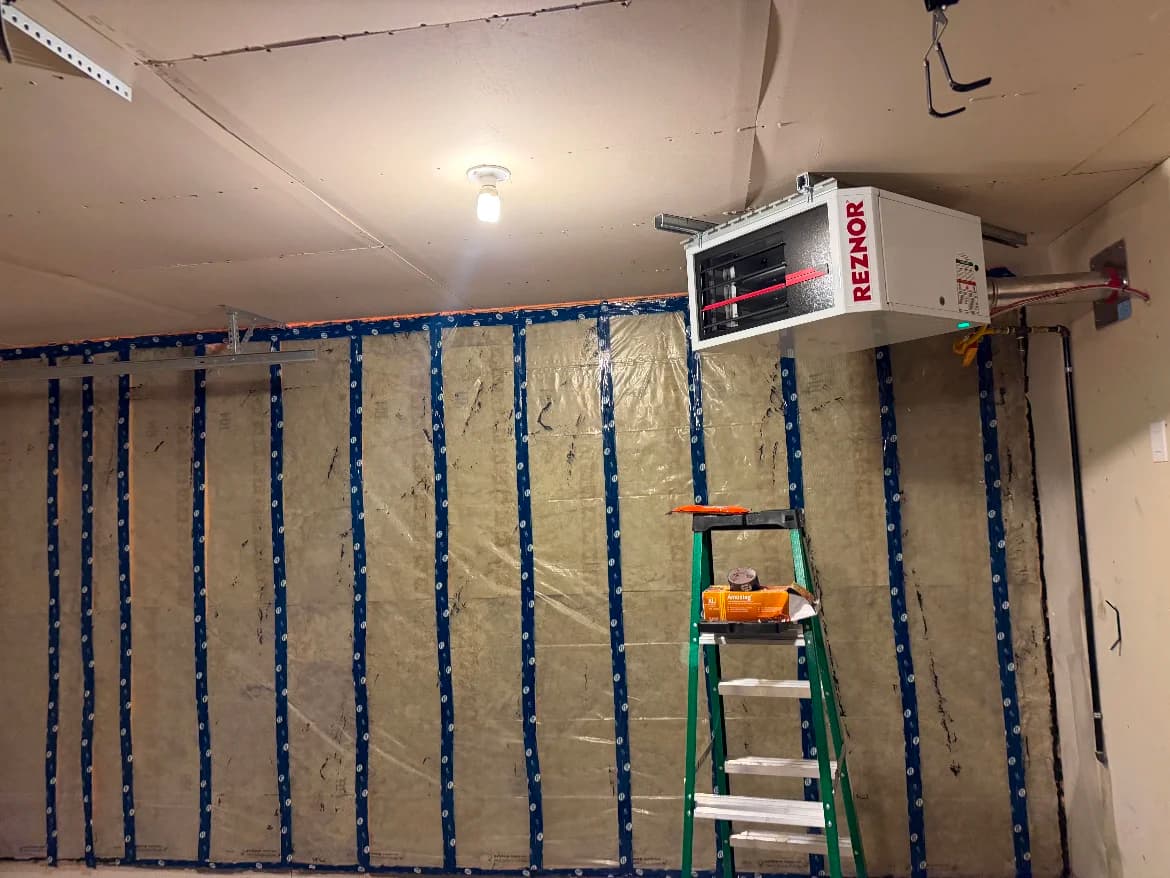
If you are planning insulation or door improvements, mention them before choosing the heater. In Gencon’s project photo, the heater is visible while the wall insulation is still exposed. Coordinating those stages makes the electrical, gas, and interior work easier to discuss together.
Understand the connections before comparing prices
A gas heater needs an appropriate gas supply and venting arrangement. It also needs the power and control connections specified for the equipment. The route and capacity of existing services affect the installation.
For a detached garage, be clear about whether services already reach the building. Any additional connection work should be listed separately enough that you can understand what the estimate includes. Ask who restores surfaces affected by the agreed work.
Confirm permits and inspection responsibilities
The City of Calgary requires gas work to be handled through the applicable permits and a qualified contractor. Electrical or other permit requirements should also be checked where relevant. Requirements outside Calgary should be confirmed with the local authority.
Ask who obtains the permits, how inspections are arranged, and whether fees are included in the estimate. This guide helps you plan a professional installation; equipment installation instructions and the applicable local requirements govern the actual work.
Use the same scope when comparing estimates
An equipment-only price and a complete installation price are not directly comparable. Request a scope that makes the equipment and the work around it visible. Schedule expectations should account for any service extensions and inspections.
- Heater model, output, and mounting position
- Gas supply assessment and line routing
- Venting and termination location
- Electrical connection and thermostat
- Permit fees and inspection responsibilities
- Startup checks, operating instructions, and cleanup