Gas-fired unit heaters
A self-contained gas heater, hung overhead, that blows warm air into the garage without ducts. New models sold in Canada must reach at least 80% thermal efficiency.
Calgary & area/ Residential & commercial
Your garage. Back in season.
Make room for winter projects, early starts, and a more comfortable workshop. Gas garage heater installations with the connections coordinated from the start.
Prefer to talk? 587-316-4292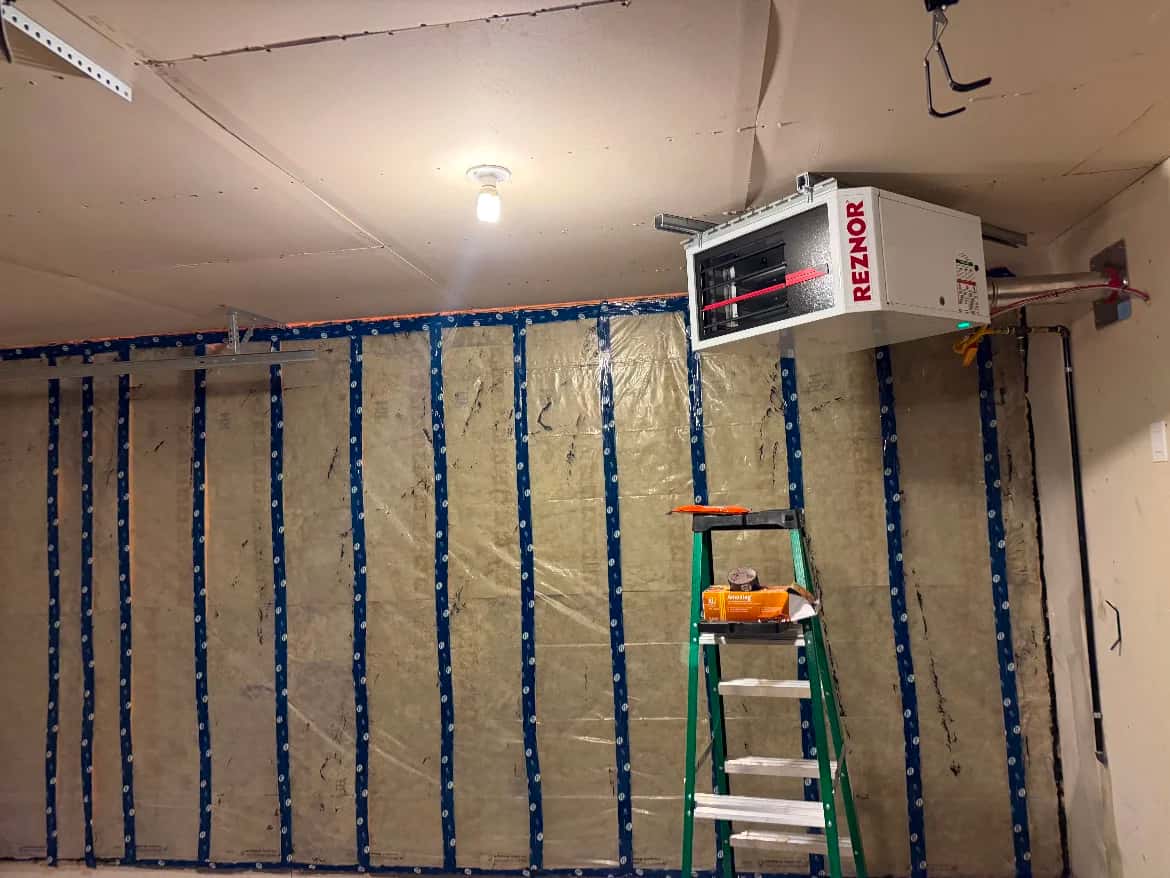
A complete garage heater installation covers the heater type and size, mounting, gas supply, venting, power, thermostat and commissioning. Gencon brings these together, so you have one point of contact.
A self-contained gas heater, hung overhead, that blows warm air into the garage without ducts. New models sold in Canada must reach at least 80% thermal efficiency.
A gas-fired tube hung overhead gives off radiant heat, which travels in straight lines, like light, and warms the floor, vehicles and people it reaches.
No gas line or vent, so the work is electrical. Natural Resources Canada (NRCan) treats plug-in units as supplementary heat.
Sizing
A heater is sized from the garage’s heat loss on a cold day, not from floor area alone.
NRCan advises sizing from measurements of the space, its insulation and its airtightness. Ceiling height, door openings and the temperature you want change the load.
Heat loss is calculated at a January design temperature, as NRCan does for houses.
One kilowatt of electric heat gives 3,412 Btu per hour, so a 5 kW heater gives about 17,000 Btu per hour.
Venting and gas permits
A gas heater vents its exhaust outdoors. Alberta’s installation code for gas appliances, their piping and venting is CSA B149.1; its 2025 edition took effect March 1, 2026.
A power vent pushes exhaust out with a fan, through a wall or roof. A direct vent also draws combustion air from outdoors, using no garage air.
NRCan advises keeping sidewall direct vents clear of snow, with the manufacturer’s minimum clearances to fences, shrubs and walkways.
Calgary requires a gas permit to install, alter or add to a gas system. It goes to a qualified gas fitter and covers the appliance, venting and gas line.
A homeowner can get a gas permit only as an Alberta certified journeyman gasfitter, for the single-family home they live in.
Electric heaters
The wiring is the work: the circuit, the panel and the permit.
Amps are watts divided by volts, so the wattage sets the circuit. The City requires a load calculation and work to Part 1 of the Canadian Electrical Code.
NRCan notes a house not heated by electricity usually has 60 or 100 amp service. If it falls short, the City’s options are an upgrade or an energy management system.
Needed for new wiring in an existing garage, or to extend or alter a branch circuit. With an electrical contractor, only a master electrician can obtain it.
Insulation
Heat flows from warm to cold in every direction. NRCan says insulating, caulking and weatherstripping reduce the heat a space needs.
Uncontrolled air leakage can be the major source of heat loss, NRCan says.
The higher an insulation’s RSI or R-value, the slower heat passes through it.
NRCan advises insulating before a heating system is sized. Planning to insulate later? Tell us first.
The installation, explained
Review garage dimensions, insulation, ceiling height, air leakage, and intended use before choosing the heater output.
Identify gas capacity and routing, vent termination, power, thermostat location, and required installation clearances.
Set out the equipment, installation work, applicable permits, and inspection responsibilities in the agreed scope.
Complete startup checks and show you how to operate the thermostat and care for the equipment.
Cost and timing
Every garage is quoted from its own scope. These set the price and the schedule.
The heater’s type and output set the equipment and much of the work.
The distance from the gas meter, the pipe size, and how the vent leaves the building.
A new circuit, or a panel upgrade.
Gas and power may cross the yard. Digging starts with a no-charge locate request through Alberta’s one-call system.
The City issues the permits and inspects the work.
A useful first conversation
Equipment is one part of the cost. Access, connections, and the condition of your existing systems shape the rest. Share what you know; we’ll help fill in the gaps.
Read our guide to garage heater permits in CalgaryA little clarity
The right garage heater size comes from the garage’s heat loss, not its floor area alone. Insulation, ceiling height, the overhead door, air leakage and the temperature you want all change the load. A site assessment avoids a heater that is too large or too small.
A gas garage heater in Calgary needs a gas permit, which the City issues to a qualified gas fitter. New wiring in the garage needs an electrical permit too. Gencon confirms the permits and inspections before installation.
Gencon can install a heater in a detached garage after a site assessment. If gas or suitable power does not reach the building, the estimate includes the route and the work to get it there.
Insulating a garage before installing a heater lets the heater be sized for the finished space, as Natural Resources Canada advises. If you plan to improve the walls, ceiling or overhead door, tell Gencon before the heater is chosen.
Garage heater installation cost depends on the heater type and output, the gas line’s length and capacity, the vent route, electrical work, access and permits. Gencon assesses these details and defines the scope before quoting.
A heat pump may suit an insulated garage instead of a gas heater, and it can cool the space in summer. A garage assessment compares its cold-weather capacity, how you use the space, the electrical supply, gas availability and operating costs.
Last checked against these sources on .
Let’s get started
Tell us where you’re located and what you have in mind. We’ll follow up to understand the scope and discuss next steps.
587-316-4292