Ductless mini-splits
Indoor units on a wall or floor heat or cool the room they serve. A mini-split has one indoor unit per outdoor unit; a multi-split has several. Practical where there is no ductwork.
Calgary & area/ Residential & commercial
One system. Every season.
Heat pump and ductless mini-split installation for Calgary homes. Start with a plan for your space, your existing heating, and the cold days ahead.
The National Heat Pump Rebate will pay $2,000, or up to $10,000 for households below the median income.
Prefer to talk? 587-316-4292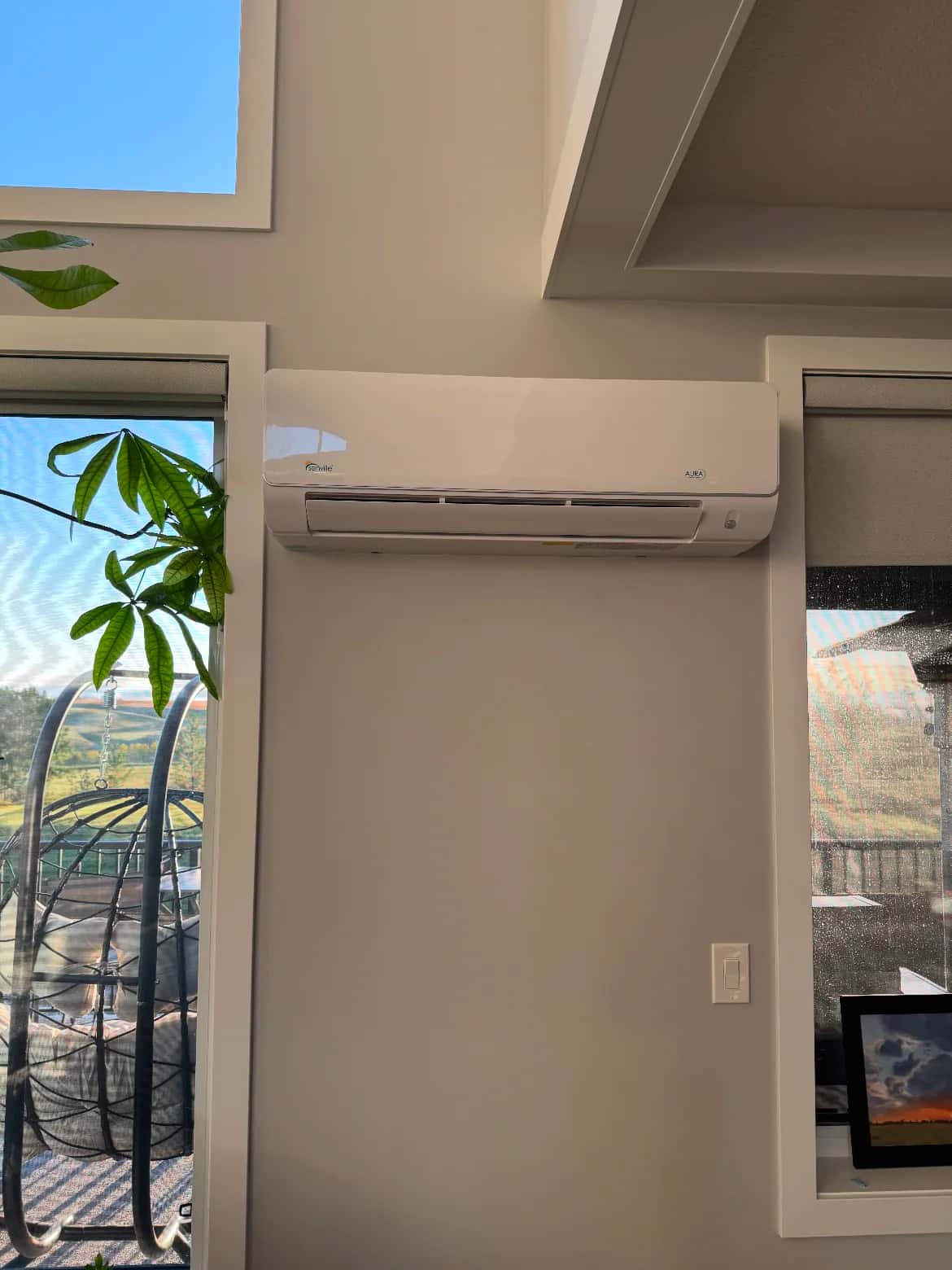
National Heat Pump Rebate
The National Heat Pump Rebate will pay $2,000, or up to $10,000 for households below the median income.
Announced on October 8, 2026, and not open yet. No launch date has been announced, though officials have said they expect early 2027.
You apply on the government’s online portal and approval is confirmed within 24 hours. After the install, you upload your receipts, and payment is approved within five days.
Read the rebate guideRebate facts last checked .
A heat pump suits a Calgary home when its heating capacity, plus backup heat for the coldest days, covers the home’s heat loss. Gencon checks the insulation, layout, ductwork, electrical service and furnace, then compares ductless, ducted and hybrid systems.
Indoor units on a wall or floor heat or cool the room they serve. A mini-split has one indoor unit per outdoor unit; a multi-split has several. Practical where there is no ductwork.
The indoor coil sits in your ductwork. Heat pumps move more air than furnaces, at a lower temperature, so we check that the ducts can carry it without added noise.
A heat pump with a furnace or boiler as backup. Natural Resources Canada (NRCan) calls it a good option when a heat pump replaces a central air conditioner.
Cold-climate performance
Outdoor air holds heat even far below freezing, and a heat pump moves it indoors. The colder it gets, the less heat it can move.
Read our guide to heat pumps in a Calgary winterNRCan says cold-climate models can operate down to -30°C. A conventional air-source unit may need supplemental heat from -10°C to -15°C.
For many installations, below a certain outdoor temperature the heat pump’s output no longer matches the home’s heat loss, and backup heat makes up the rest.
Near or below freezing, frost forms on the outdoor coil. The unit switches into defrost mode to melt it, and backup heat may run meanwhile.
Backup heat
NRCan says most air-source installations need backup heat for the coldest days. It comes in two forms.
Resistance elements in the ductwork, or electric baseboards. They work at any outdoor temperature and can run with the heat pump, but they add electrical load.
A hybrid system pairs the heat pump with a furnace. Only one runs at a time, switched by an outdoor sensor at a temperature the installer sets. It can also be switched by hand.
Pricing
NRCan says cost depends on the type of system, your goals, and the equipment and ductwork already in place.
Heat loss sets the heat pump’s size and how much backup it needs. It should be calculated with a recognized method such as CSA F280, counting planned upgrades.
Ducts may need changes for the heat pump’s airflow. Each ductless indoor unit needs a location, refrigerant lines and a condensate route.
Moving from gas heat can mean a panel upgrade. NRCan says an all-electric air-source heat pump normally needs 200-amp service.
Keeping a furnace, adding electric backup or replacing the furnace each change the work. Furnace work adds a gas permit.
City of Calgary
The City’s permit guide for energy upgrades lists what a heat pump needs. Your estimate names each permit.
Required for an air-source heat pump.
May be required when ductwork changes or is added.
Required for furnace work. The City issues it to a qualified gas fitter.
The installation, explained
We look at the rooms, insulation, furnace, ductwork and electrical panel.
We assess the heat loss, size the system and plan the backup heat.
Equipment, locations, line routes, electrical work, permits and inclusions, in writing.
We confirm the permits the work needs and book the installation date with you.
Outdoor unit, indoor units or coil, refrigerant and condensate lines, and the electrical work.
Start-up checks, switchover settings and inspections, then a walk-through of the thermostat and filter. NRCan advises cleaning or changing the filter every three months.
Scheduling
The schedule is confirmed once the scope is set. Here is what moves it.
Plan around the rebate’s timingA service upgrade goes through ENMAX. NRCan suggests planning ahead: electrical upgrades and other renovations can take up to a year.
The City issues each permit and inspects the work.
In a townhouse, rowhouse or condo, the City requires you to talk to your condo board or homeowner association first.
The government has not confirmed whether heat pumps installed before the program opens will qualify.
A useful first conversation
Equipment is one part of the cost. Access, connections, and the condition of your existing systems shape the rest. Share what you know; we’ll help fill in the gaps.
Read our guide to installing heating in a Calgary winterA little clarity
A cold-climate heat pump can heat a Calgary home in winter, with backup heat planned for the coldest days. Natural Resources Canada says these models can operate down to -30°C. Gencon assesses the home’s heat loss, furnace and backup-heating needs before recommending a system.
A compatible furnace can stay with a heat pump as a hybrid, or dual-fuel, system. The two take turns rather than running together, switching at an outdoor temperature set at installation. Gencon reviews the furnace and ductwork to confirm a combined system makes sense.
Whether a heat pump lowers a Calgary home’s energy bills depends on the home, the equipment’s efficiency, outdoor temperatures, electricity and gas rates, and the control settings. Ask for projected operating costs against your current system, with the assumptions, before you decide.
A heat pump does not always need ductwork. Ductless mini-splits connect wall or floor units to an outdoor unit, while a ducted heat pump uses central ductwork. The rooms you want to serve and the home’s layout decide which fits.
The National Heat Pump Rebate will pay $2,000, or up to $10,000 for households below the median income. The government has not published the median-income threshold yet.
The National Heat Pump Rebate is not open yet. The federal government announced it on October 8, 2026. No launch date has been announced, though officials have said they expect early 2027. You can sign up on canada.ca to hear when applications open.
The government has not confirmed whether the National Heat Pump Rebate will be retroactive to installs made before it opens. The steps announced so far have you get approval before you buy. If your heating can’t wait, we can install now and keep your paperwork ready in case earlier installs are made eligible.
Eligibility for the National Heat Pump Rebate goes by model, not by brand. A heat pump must be an electric cold-climate air-source model on the government’s Eligible Products List, which will offer over 100,000 options. The list has not been published yet.
No installer licence or registration requirement has been announced for the National Heat Pump Rebate. The government says it will work with HVAC installers on the rollout, and with technical colleges and industry associations on certifications.
Under the announced steps, the homeowner applies for the National Heat Pump Rebate on the government’s portal, submits the receipts and is paid. Gencon gives you the model details the pre-approval asks for, walks you through the application, and sends your receipts the day the job is done. You press submit.
How long a heat pump installation takes depends on the number of indoor units, the line routes, any electrical upgrade, site access, and the permits and inspections. Gencon confirms the schedule once the scope has been assessed.
Last checked against these sources on .
Let’s get started
Tell us where you’re located and what you have in mind. We’ll follow up to understand the scope and discuss next steps.
587-316-4292