Heat pumps
Heat pumps in Calgary: planning for winter
By Gencon Contracting · Updated
Will it heat my home when it gets cold?
Air-source heat pumps move heat between the outdoors and your home. Cold-climate equipment is designed to provide useful heat at lower outdoor temperatures. However, being able to run at a temperature is different from delivering enough heat to meet the entire building’s demand at that temperature.
Ask for the proposed model’s heating capacity at the temperatures used for your design. That number should be considered alongside a heat-loss assessment, insulation, air leakage, and the rooms being served. A generic temperature claim is not a substitute for a plan for your particular home.
What happens to the existing furnace?
A compatible furnace can remain part of a hybrid heating system. The controls determine when the heat pump runs and when the furnace takes over. Other homes may use a different backup arrangement. The right choice depends on the existing equipment and the design.
Before work starts, make sure the estimate explains equipment compatibility and control responsibilities. At handover, ask the installer to demonstrate the heating modes and explain the intended changeover settings. You should understand what happens during a cold snap without having to guess at thermostat settings.
Ducted or ductless: start with the rooms
A ducted system uses compatible central ductwork to distribute conditioned air. A ductless mini-split uses one or more indoor units. The choice is about the layout, existing distribution, and the areas you actually want to improve.
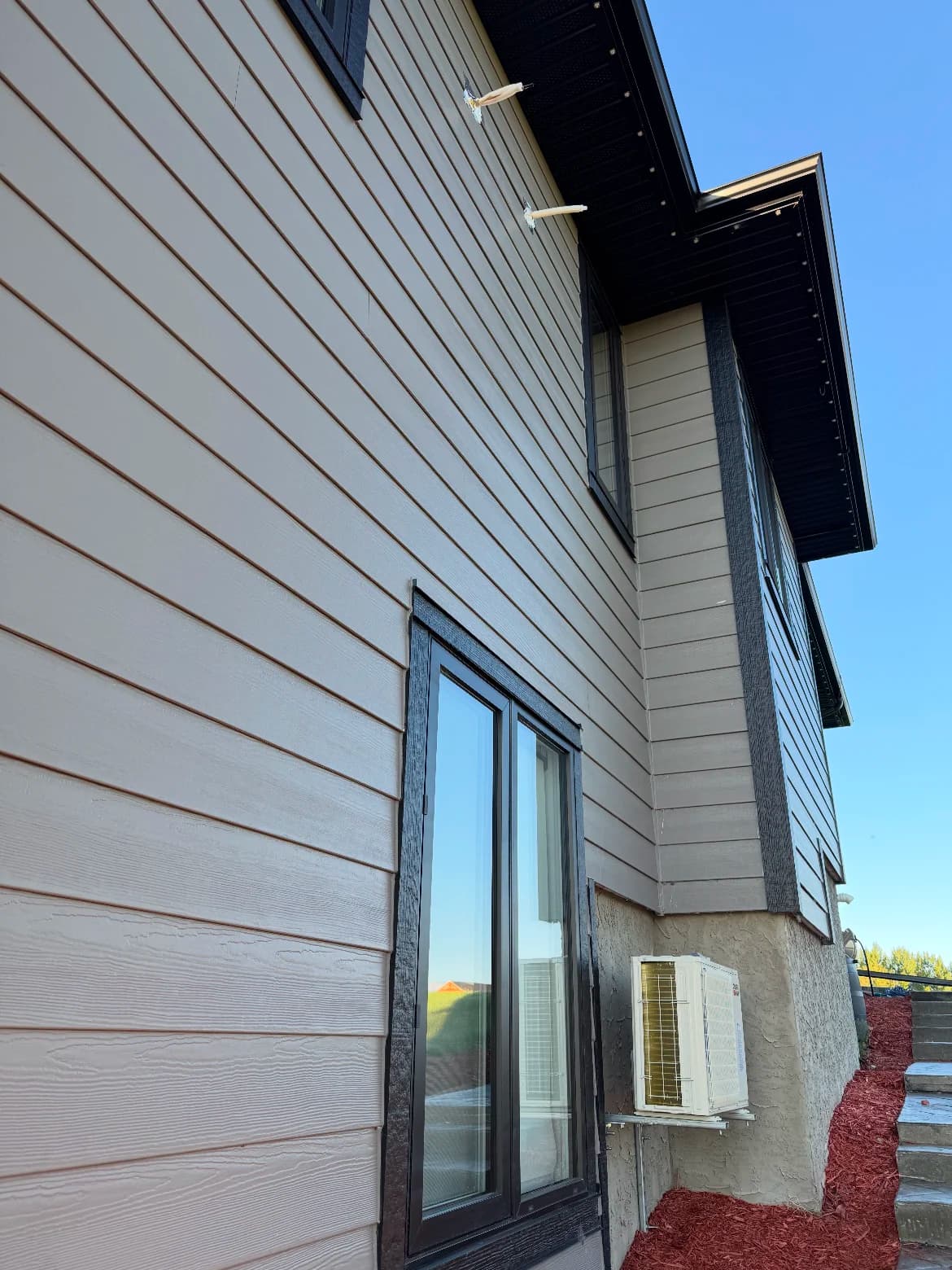
The Gencon project library shows both an outdoor unit mounted along a home’s exterior and an indoor head above a living-room wall. These are useful reminders that placement matters inside and out: the installation needs room for equipment, service access, refrigerant lines, and condensate routing.
What should the estimate explain?
Compare the full installation scope, not just an equipment name. Differences in electrical work, indoor-unit count, line routing, and existing ductwork can change the work involved. Ask for inclusions, exclusions, and responsibilities to be written down.
- Equipment model and areas served
- Heating design and backup arrangement
- Indoor and outdoor equipment locations
- Electrical and ductwork changes
- Refrigerant and condensate routing
- Applicable permits, startup checks, and handover
Keep operating costs and rebates separate
Energy use and utility cost are different questions. Efficiency, local electricity and gas rates, outdoor temperature, and control settings affect the comparison with your current system. Ask which assumptions were used in any savings estimate.
Build the decision around an installation you understand. If you plan to apply for an incentive, verify the live program rules with its administrator before committing. Do not treat a rebate as confirmed income until your eligibility and application requirements have been established.
Read our guide to the National Heat Pump Rebate