Plumbing & Gas
Boiler Replacement Calgary: Costs and Modern Hydronic Upgrades
By Brandon Fraser · · 10 min read
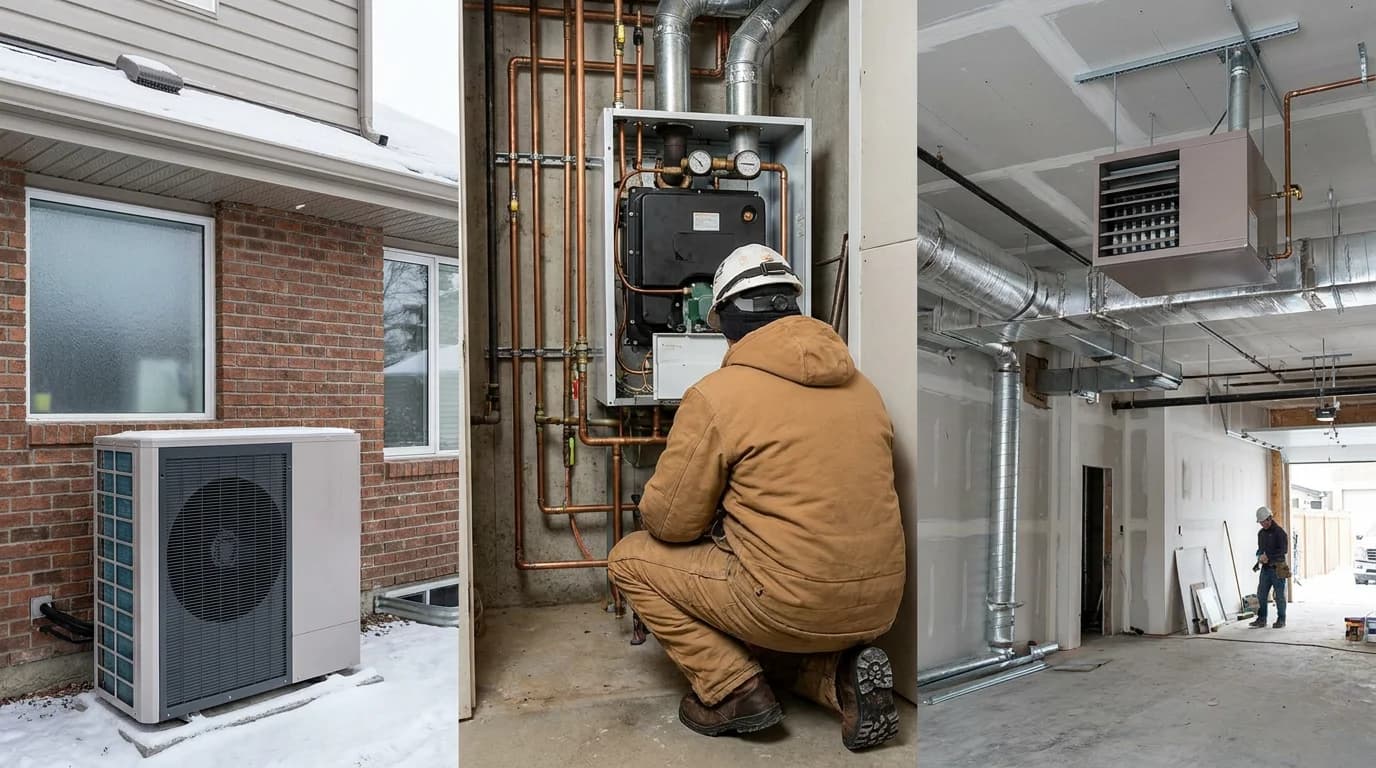
TL;DR
Planning a boiler replacement in Calgary typically means budgeting $8,000 to $15,000 for a permitted, high-efficiency condensing installation. Replacing an aging unit can reduce breakdown risk, meet current safety requirements, lower natural gas use by 10% to 20%, and improve performance with radiant heating.
Is It Worth Replacing a 20-Year-Old Boiler?
Yes, replacement usually makes sense when a boiler has reached 20 years, needs frequent repairs, or has a failing heat exchanger. A small repair may still be practical when the pressure vessel and main controls remain sound.
Most residential boilers have an expected service life of about 15 to 20 years. Beyond that range, corrosion, heat exchanger fatigue and scale buildup become more likely. Worn circulators, valves and ignition components can also reduce reliability.
Efficiency declines as internal surfaces foul and control systems age. An older atmospheric boiler may have started near 80% AFUE, meaning about one-fifth of its fuel energy was not converted into usable heat. Real operating performance can fall further when a boiler short-cycles or runs with poor combustion.
Boiler repair in Calgary makes sense for isolated problems, such as a replaceable sensor, valve or ignition component. Replacement becomes the stronger option when:
- The heat exchanger leaks or shows serious corrosion.
- Replacement parts are obsolete or difficult to source.
- Several major components need attention at once.
- The boiler shuts down repeatedly during cold weather.
- The existing system cannot support planned zoning or radiant upgrades.
A failure during a cold snap can also create frozen-pipe and water-damage risks. Emergency work may cost more than a planned project and offers less time for system design. A planned boiler replacement in Calgary lets us assess capacity, venting, gas supply and distribution before the old unit fails.
We look at the entire hydronic system during a Calgary boiler service visit. Repairing one component is not useful if the pressure vessel, controls and near-boiler piping are all near the end of their service lives.
What Is the Total Cost of Boiler Replacement in Calgary?
A standard residential condensing replacement typically costs $8,000 to $15,000. Complex multi-zone, high-capacity or heavily repiped systems can reach $20,000, depending on the property and installation scope.
The boiler itself is only one part of the invoice. A complete installation may include removal, piping fabrication, controls, electrical work, venting, condensate drainage, permits, inspection and commissioning.
Main cost drivers
- BTU capacity: Correct sizing starts with a heat-loss calculation, not the old boiler’s rating.
- Mechanical room layout: Restricted access and poor service clearances can require reconfiguration.
- Venting: A condensing boiler normally needs dedicated venting instead of an existing chimney connection.
- Gas supply: The piping must support the boiler’s input while other gas appliances are operating.
- Hydronic distribution: Old pumps, expansion tanks, air separators and zone controls may need replacement.
- Electrical work: New controls, pumps or disconnects can expand the scope.
Local industry guidance reports that mid-efficiency boilers have not been available for new Alberta installations since July 2023. In practice, replacements now use high-efficiency condensing equipment. That change can require more work than a direct swap.
Moving from an aging 80% AFUE boiler to a properly controlled condensing unit can reduce natural gas use by roughly 10% to 20% in suitable systems. Savings depend on weather, insulation, water temperatures, controls and occupant habits. Fuel savings alone may not provide a short payback, but reliability and avoided repairs also matter.
Rebate and efficiency programs change. Homeowners should confirm current eligibility and requirements directly with the utility or federal program before including an incentive in their budget.
How Much Does It Cost to Install a New Boiler in Canada?
The boiler replacement cost in Canada generally ranges from $4,000 to $13,500. Basic projects average around $5,750, while high-efficiency installations in Western Canada and Ontario commonly fall between $8,000 and $20,000.
Those national figures combine many fuels, building types and installation standards. They may include simple electric units, straightforward gas replacements and complex oil or biomass systems. They are broad national estimates.
| System type | Typical cost considerations |
|---|---|
| Natural gas | Common in Calgary; venting, condensate drainage and gas sizing affect the total. |
| Propane | Similar hydronic design needs, with additional fuel-storage and supply considerations. |
| Electric | Often less complex to install, but operating costs can be higher in a cold climate. |
| Oil or biomass | More specialized equipment, fuel storage and servicing can increase project complexity. |
Skilled labour typically represents 40% to 50% of an installation invoice. Hydronic work involves more than connecting supply and return pipes. The contractor must fabricate piping, test the gas system, verify water flow, configure controls and commission combustion.
Regional conditions also affect price. Calgary installations must account for severe winter design temperatures, municipal permits and local trade availability. Ontario pricing can also be higher, with one market source reporting that installed high-efficiency natural gas or propane boilers start around $11,750.
When we plan a boiler installation in Calgary, we treat national averages as broad context. The existing mechanical room and distribution system usually determine whether a project sits near the lower or upper end.
Alberta Safety Codes, Venting and Mechanical Permits
Boiler work in Alberta falls under the Safety Codes Act and the applicable gas, plumbing and boiler requirements. Permits and inspections are mandatory project requirements.
Alberta’s boiler safety framework states that a certificate of inspection permit is required before applicable boiler or pressure-vessel equipment is placed in service. The exact permits and inspections are confirmed for each property and system.
Older atmospheric boilers often use a draft hood and a vertical masonry or metal chimney. A modern condensing unit normally uses sealed combustion with dedicated intake and exhaust piping. Approved materials may include PVC, CPVC or polypropylene, depending on the boiler manufacturer and vent conditions.
Vents must terminate in a compliant location. Clearances from openings, grade, property features and other equipment matter. Calgary frost, drifting snow and exhaust recirculation must also be considered when selecting a termination point.
Condensing boilers create acidic condensate as they recover heat from exhaust vapour. That liquid needs a suitable drain route and may require neutralization. An old chimney cannot be reused unless the appliance and approved venting design allow it.
For gas-fired equipment, a qualified contractor handles regulated work. The installation scope normally includes:
- Confirming permit requirements and submitting applications.
- Checking gas pipe capacity and appliance demand.
- Completing required pressure tests.
- Installing approved venting and condensate drainage.
- Scheduling municipal or agency inspections.
- Correcting deficiencies before the equipment enters regular service.
Our Calgary boiler service planning includes access for future maintenance. Safe equipment can still become difficult and expensive to service when valves, panels or drains are blocked.
Condensing Boilers vs. Traditional Atmospheric Units
Traditional atmospheric boilers typically operate around 80% to 82% AFUE. Condensing boilers recover additional heat from water vapour in the exhaust, allowing rated efficiencies from about 90% to 98% AFUE.
AFUE means Annual Fuel Utilization Efficiency. It estimates how much fuel becomes useful heat over a heating season. A higher rating reduces flue losses, but the system must be designed to keep the boiler condensing as often as practical.
The return-water temperature is central to that performance. Cooler water lets vapour condense inside the secondary heat exchanger. The boiler captures latent heat that an atmospheric unit would send up the chimney.
Natural Resources Canada publishes ENERGY STAR boiler guidance for residential equipment. It reports that certified gas boilers use about 10% less energy than standard models on average. Household results depend on sizing, distribution and operating conditions.
Modern boilers also use burner modulation. The burner reduces its firing rate as demand falls. Outdoor reset controls lower the target water temperature during milder weather. Together, these features reduce short-cycling and support longer, steadier operating periods.
Those controls are especially useful during Calgary’s Chinook swings. A system designed for deep winter conditions does not need maximum water temperature on every heating day.
Gas supply remains critical. A high-efficiency boiler cannot deliver its rated capacity if the gas line is undersized. During boiler installation in Calgary, we check pipe length, connected appliances and peak input requirements. Boiler repair in Calgary should also include combustion testing when operating problems suggest a fuel or airflow issue.
Integrating New Boilers with In-Floor and Radiant Heating
Condensing boilers are well matched to radiant floors because both perform effectively at low water temperatures. Many radiant loops operate around 32°C to 49°C, or 90°F to 120°F, which helps keep return water cool enough for condensing operation.
A boiler replacement does not automatically make an old radiant system efficient. Flow rates, loop lengths, floor construction and control settings still need review. Slab zones may also require different water temperatures than radiators or baseboard convectors.
Mechanical room upgrades
Combining radiant floor heating in Calgary with a new boiler may add several components:
- Distribution manifolds with individual loop controls.
- Mixing valves for lower-temperature zones.
- Secondary circulator pumps where hydraulic separation is needed.
- Zone valves and thermostats for room-by-room control.
- Air separators, expansion tanks and isolation valves.
- Controls that coordinate several water temperatures and heating calls.
A small radiant zone added to an existing system with spare capacity commonly costs $4,500 to $9,500. A whole-home retrofit with a new boiler, floor work, manifolds and controls may cost $22,000 to $55,000. These are regional estimates from a Western Canadian cost guide.
In-floor heating in Calgary offers steady surface warmth without forced-air drafts. Concrete slabs also store heat, which can maintain comfort as outdoor temperatures change. However, that thermal mass responds slowly, so control strategy matters during Chinook conditions.
We assess whether the existing boiler has enough capacity before adding a zone. We also check whether the distribution system can deliver the required flow without affecting other rooms. A properly sized manifold and control package is often more important than the tubing itself.
Professional Installation, Gas Sizing and Commissioning
A standard boiler replacement often takes one to two days. Extensive repiping, manifold additions or multi-zone controls can extend the project to a week, depending on access, inspections and the condition of the existing system.
Our process starts with room measurements, a heat-loss calculation and an inspection of the current hydronic system. We review the boiler, emitters, pumps, controls, gas supply, vent route and available drainage before selecting equipment.
The old boiler is then isolated, removed and disposed of. New work can include fabricated supply and return headers, service valves, pumps, expansion control and wiring. Gas and electrical work require permits and qualified trades, so those requirements are confirmed for the property.
Commissioning checklist
- Fill the system and bleed trapped air from every accessible loop.
- Set manifold flow meters and balance the zones.
- Check operating pressure and expansion-tank performance.
- Test the pressure relief valve and low-water cutoff.
- Verify pump direction and control sequences.
- Measure combustion gases and adjust within manufacturer limits.
- Confirm outdoor reset and domestic hot-water priorities.
- Register the equipment warranty and document settings.
Proper commissioning ensures the equipment operates as a balanced heating system. Skipping flow balancing or control setup can cause noise, uneven heat and unnecessary cycling.
Annual preventative service helps protect the investment. A Calgary boiler service should include inspection, cleaning, combustion checks and testing of safety controls. System-water quality also matters because untreated fill water can contribute to scale, corrosion and blocked heat exchangers.
We recommend keeping the installation record, permit documents, model information and commissioning settings together. Those records give future technicians a clear baseline for maintenance and diagnosis across Calgary, Airdrie, Cochrane, Okotoks and Chestermere.