Heat Pumps
Choosing a Cold Climate Heat Pump in Canada
By Brandon Fraser · · 9 min read
TL;DR
A cold climate heat pump in Canada can reliably heat many homes at -25°C to -30°C, but backup heat remains sensible for deep cold and peak loads. Modern inverter systems often deliver two to three times the efficiency of electric resistance or oil heating, lowering operating costs when sizing, controls and installation are right.
Do Heat Pumps Really Work in Cold Climates?
Yes. Modern cold-climate heat pumps can produce useful heat at temperatures approaching -30°C. However, keeping the compressor running is not the same as meeting a home’s full heating demand during the coldest hour.
Heat remains present in outdoor air below freezing. Refrigerant circulating through the outdoor coil absorbs that energy. The compressor raises its pressure and temperature, allowing the indoor coil to release usable heat.
As the outdoor temperature falls, the compressor works harder. Heating capacity and coefficient of performance, or COP, also decline. That is why the heat pump winter temperature rating must be reviewed beside the home’s calculated heat loss.
NRCan heat pump guidance states that cold-climate air-source systems can operate at temperatures as low as about -30°C. Below that point, supplemental heating may be needed.
Canadian field results support those limits. An Ottawa test house recorded an average COP near 1.5 at -21.1°C and about 3.0 at 4.9°C. The system maintained comfort with help from electric resistance backup.
Northern field studies have also shown useful low-temperature operation. Defrost, standby energy, controls and installation quality affect seasonal results. Select equipment using local design temperatures, heating-load calculations and published low-ambient capacity data.
How Do Cold-Climate Heat Pumps Operate Below Zero?
Cold-climate air-source heat pumps, or ccASHPs, use advanced vapour-compression cycles. Some use vapour injection and enhanced refrigerant management to support compressor capacity during deep cold.
Variable-speed, inverter-driven compressors are central to heat pump winter efficiency. Instead of switching between fully on and fully off, they adjust output to the building load. Lower speeds reduce cycling during mild weather. Higher speeds provide more capacity as the outdoor temperature falls.
Frost management is another important difference. Moisture can freeze on the outdoor coil during damp winter conditions. The system periodically enters reverse-cycle defrost, sending heat outdoors to clear the coil. Indoor supply air may cool briefly during that cycle. Proper controls or auxiliary heat can temper the air.
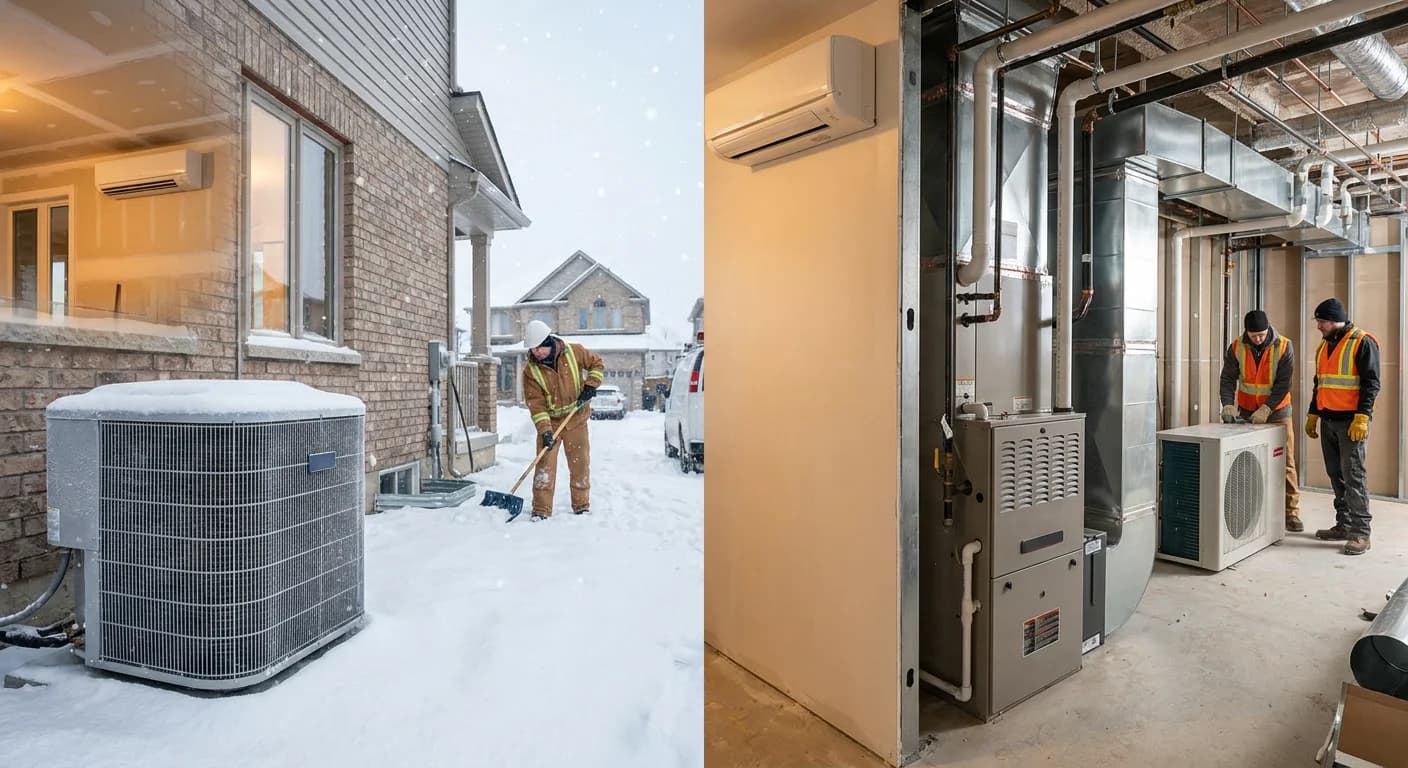
Outdoor placement affects performance and service access. We plan the equipment location around several winter conditions:
- Elevate the unit above expected snow accumulation.
- Keep roof runoff and drifting snow away from the coil.
- Leave enough clearance for airflow and maintenance.
- Use an appropriate wind baffle where exposure could disrupt airflow.
- Provide drainage for water produced during defrost.
A buried coil or blocked drain can cause repeated icing and poor output. Refrigerant, electrical and control work also require permits and qualified contractors. Requirements must be confirmed for each property.
What Separates Cold-Climate Units From Standard Models?
The cold climate heat pump vs. regular heat pump comparison starts with compressor design. Standard equipment may use a single-stage compressor intended for moderate weather. Cold-climate equipment typically uses variable-speed compression, larger operating ranges and controls built around low ambient heating.
Capacity retention matters more than the headline tonnage. A standard residential heat pump can lose heating capacity below about -5°C. Cold-climate-certified equipment must retain at least 70% of its 8.3°C heating capacity when tested at -15°C under ENERGY STAR criteria.
For many homeowners, selecting a cold climate heat pump in Canada begins with comparing this low-temperature data.
Winter-ready units may also include crankcase and drain pan heaters. A crankcase heater protects compressor operation by managing refrigerant migration. A drain pan heater helps prevent defrost water from freezing before it can drain.
These components consume electricity, so their controls matter. Poorly managed standby heaters can reduce seasonal performance even when the compressor itself is efficient.
A standard unit may still run during cold weather, but its output can fall below the building load. Electric resistance backup then carries more of the work. The result can be uneven comfort and a sharp utility increase.
We compare the equipment’s maximum heating capacity at local design conditions with the calculated room-by-room load. Nominal capacity at mild test temperatures is not enough for a Canadian winter design.
How Do COP, HSPF2 and SEER2 Measure Efficiency?
COP measures efficiency at a specific operating point. A COP of 3 means the heat pump delivers three units of heat for each unit of electricity used. Electric resistance heating has an effective COP near 1.
| Metric | What it measures | Why it matters |
|---|---|---|
| COP | Heat delivered divided by electricity used | Shows performance at a stated temperature |
| HSPF2 | Standardized seasonal heating efficiency | Helps compare winter energy performance |
| SEER2 | Standardized seasonal cooling efficiency | Helps compare summer operation |
Cold climate heat pump efficiency is a curve. NRCan modelling found COP values around 1.4 to 2.15 at -25°C, depending on the model and operating speed. Efficiency rises as conditions become milder.
The updated HSPF2 and SEER2 tests use revised procedures compared with older HSPF and SEER ratings. When comparing quotes, check that the contractor is using the same rating standard for every system.
ENERGY STAR criteria require cold-climate models to reach a minimum COP of 1.75 at -15°C (5°F). Equipment must also pass a controls verification procedure to confirm that low-ambient performance metrics are achieved by the native controls operating as they would in a home.
The NEEP cold-climate product list is another useful screening tool. Certification does not replace heat-loss calculations, duct assessment or commissioning. We use ratings to narrow the equipment choices, then verify whether the complete system suits the building.
How Do You Choose a Cold Climate Heat Pump in Canada?
Choose variable-speed equipment with published capacity and COP data at -15°C and -25°C. Size it to cover the calculated design heating load, while avoiding excessive cooling capacity.
A centrally ducted split system works well where usable forced-air ductwork already exists. It can provide whole-home heating, cooling and filtration through one air handler. However, undersized returns or restrictive ducts may require sheet-metal modifications.
A ductless mini-split suits homes with baseboards, boilers or difficult duct routes. A multi-split connects several indoor heads to one outdoor unit. It offers zoning, but each indoor unit must be placed where air can circulate effectively.
When comparing cold climate heat pump brands, focus on the matched indoor and outdoor system. Review:
- Maximum heating output at low ambient temperatures
- COP at each published winter test point
- Minimum operating temperature
- Sound ratings at high compressor output
- Defrost and auxiliary heat controls
- Parts distribution and local service support
- Equipment, parts and labour warranty terms
Sound deserves attention because the outdoor unit may run at full compressor speed during sub-zero weather. Placement beside bedrooms, decks or neighbouring property lines should be assessed before installation.
We also verify electrical capacity, airflow, refrigerant line routing and drainage before final equipment selection. The best paper specification will not correct an installation that restricts airflow or stages backup heat too early.
When Does a Heat Pump Need Backup Heat?
Backup heat is needed when the building load exceeds the heat pump’s available capacity. It may also operate during defrost or when outdoor temperatures fall below the equipment’s operating range.
Central systems often use electric resistance strips inside the air handler. Existing baseboard zones can also remain as supplemental heat. The backup should be sized for the load it may need to carry.
Hybrid or dual-fuel systems pair a heat pump with a gas or propane furnace. The heat pump handles mild and moderately cold weather. The furnace takes over, or assists, below a selected balance point.
The economic balance point depends on electricity rates, fuel prices, equipment COP and furnace efficiency. It is not the same as the thermal balance point where heat pump capacity meets the home’s load.
Controls must prevent unnecessary resistance heating. A large overnight thermostat setback can create a rapid morning recovery demand. That demand may trigger expensive electric strips even when the heat pump could maintain the normal setpoint efficiently.
Hydro-Québec winter advice recommends keeping the heat pump operating and setting baseboards slightly lower. The backup then engages only when needed.
A heat pump’s winter temperature limit should remain separate from its load coverage. Heat pump winter efficiency can still be favourable in deep cold, yet the unit may not produce enough total heat for that specific building.
How Much Does a Winter-Ready Heat Pump Cost?
A centrally ducted cold-climate system represents a turnkey investment depending on equipment size and home requirements. Rebates may reduce the net cost, but availability and eligibility depend on the current program, household and property.
Ductless mini-split pricing varies with the number of indoor zones, line-set routes and electrical requirements. A simple single-zone project differs from a whole-home multi-split. Quotes should identify the exact indoor and outdoor model combination.
The price of a cold climate heat pump can also include work outside the equipment package:
- An electrical service upgrade or new subpanel
- Dedicated breakers, disconnects and control wiring
- Duct alterations, larger returns or a new air handler
- Equipment stands, drainage and snow protection
- Backup electric heat or dual-fuel integration
NRCan estimated annual savings of $700 to $1,900 compared with electric resistance heating. Estimated savings against oil heating ranged from $1,000 to $3,500 per year. ROI depends on local rates, climate, insulation, backup use and the system being replaced.
Federal pathways include the Oil to Heat Pump Affordability Program and planned home-energy retrofit initiatives. Provincial governments and utilities may also offer incentives. Programs change, so homeowners must confirm current eligibility, covered costs and application steps directly with each administrator.
For projects in Calgary, Airdrie, Cochrane, Okotoks and Chestermere, we assess the heating load, electrical service, ductwork and backup strategy together. That coordinated review helps prevent one trade’s decision from creating added work or poor performance elsewhere.